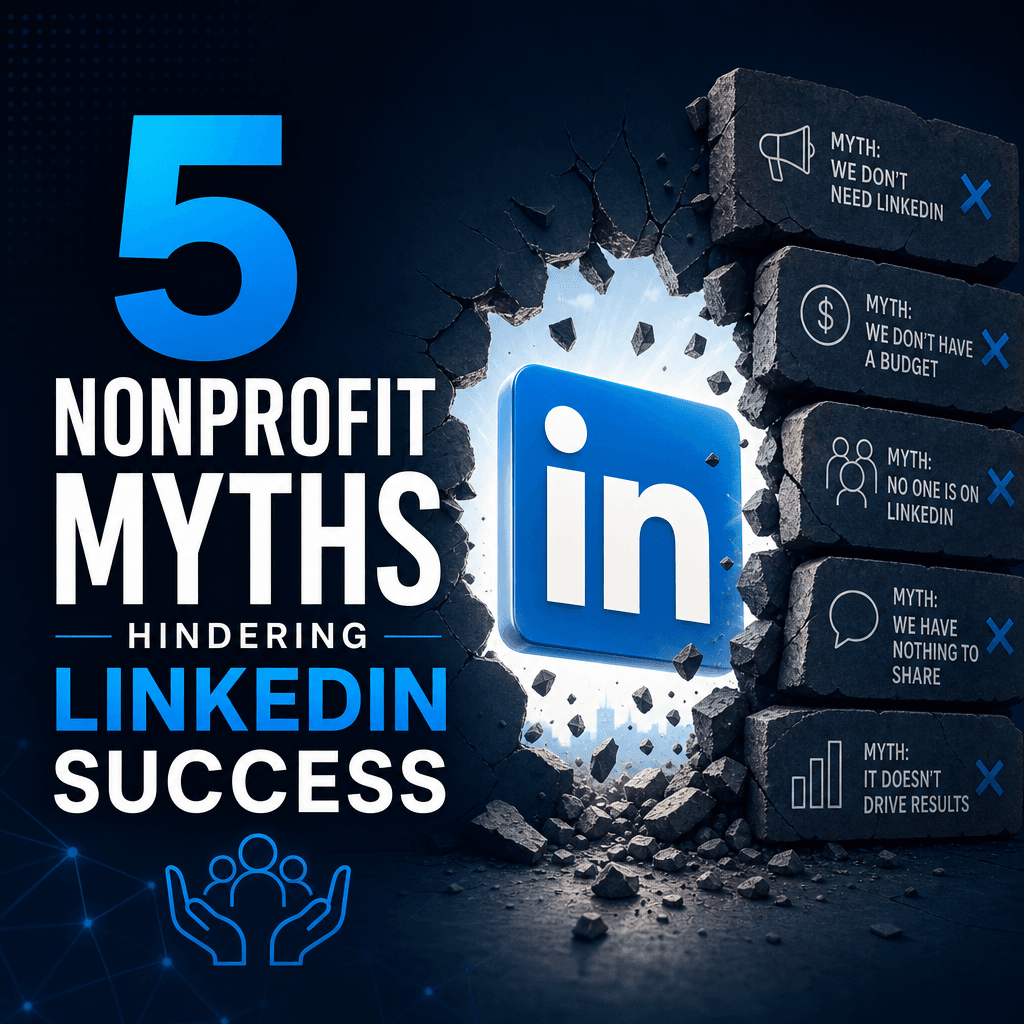
5 Nonprofit Myths Hindering LinkedIn Success
Discover truths that elevate your cause on LinkedIn.

Myth #1: Nonprofits Don’t Fit LinkedIn’s Professional Vibe
The perception that LinkedIn is a space solely for corporate networking can deter nonprofits from leveraging its platform effectively. Yet, LinkedIn is a fertile ground for nonprofits to connect with potential donors, volunteers, and advocates who are passionate about contributing to causes. Embracing LinkedIn as a professional yet community-oriented platform can drastically elevate a nonprofit’s visibility and reach.
Nonprofits can enrich their profiles by highlighting professional development opportunities, volunteer stories, and impactful projects, all of which resonate with LinkedIn’s audience. By framing their contributions in terms of real-world impact and tangible benefits, nonprofits can appeal to a broad spectrum of professionals seeking meaningful engagement. It's essential to debunk this myth to harness LinkedIn's full potential for nonprofit growth.
Explore how to maximize your nonprofit's impact on LinkedIn by reading Maximizing Impact: Non-Profit Innovations via LinkedIn. Discover content strategies and how to showcase unique nonprofit narratives effectively. Understanding LinkedIn’s professional yet human-centric persona is crucial to elevating your nonprofit's LinkedIn success.
Myth #2: LinkedIn Is Only for B2B Networking
The misconception that LinkedIn is purely a B2B networking tool can lead nonprofits to overlook its broader possibilities. While LinkedIn is a treasure trove of professional connections, it is also a dynamic platform for storytelling and advocacy. Nonprofits can dismantle this myth by focusing on the impact stories and educational content that engage individuals at a personal level.
Through creating content that fosters discussions around societal issues and challenges, nonprofits can build a community of engaged supporters. Sharing insights from influential leaders within the nonprofit sector and showcasing the human side of initiatives broadens the scope of potential connections. For practical tips on how to market nonprofit organizations on social networks, read How to Market on Social Media by Mailchimp.
Incorporating LinkedIn into a holistic social media strategy requires understanding its unique audience and engaging them with authentic, mission-driven content. Nonprofits that successfully bridge the gap between professional networking and cause advocacy can drive substantial engagement and support on this platform.
Myth #3: Video Content Isn’t As Effective on LinkedIn
Some might think LinkedIn is more for text-heavy content than visual stories, but video can be highly effective in driving engagement. Nonprofits can use video to personalize their message, showcasing their impact through compelling narratives and live testimonials. High-quality video content is a great way to break through the noise and connect with LinkedIn's professional, yet emotionally aware audience.
By utilizing tools that support video content creation such as FlowPost, where videos, carousels, and images are seamlessly integrated, nonprofits can maintain a steady stream of engaging content. Videos that highlight volunteer efforts, project milestones, or donor feedback can humanize a cause, making it more relatable and compelling. Learn how to enhance your social media timing with expert tips from FlowPost's Social Media Timing Optimizer for optimum reach.
With the right approach, LinkedIn video content can transcend traditional marketing, fostering deeper connections and driving meaningful engagement. Incorporating video content as part of your outreach strategy can amplify awareness and support for your mission.
Myth #4: You Need a Big Budget for LinkedIn Success
A common misconception is that significant funding is required to achieve success on LinkedIn. In reality, strategic planning, creativity, and consistent messaging are often more impactful than extensive financial resources. Nonprofits can maximize their presence on LinkedIn by leveraging their strengths and making smart content decisions.
Without a significant budget, nonprofits can still capitalize on free features that LinkedIn offers, such as creating engaging company pages and publishing insightful articles. Collaborating with industry professionals or partners to expand reach organically is a cost-effective way of increasing visibility and engagement. Discover how automation can save time and resources by visiting Adam Connell's guide to Social Media Automation Tools.
Utilizing no-cost networking opportunities and building authentic professional relationships can yield greater dividends than costly advertisements. Nonprofits that strategically employ these tactics often achieve sustainable success without the burden of high expenditures.
Myth #5: LinkedIn Audience Isn’t Interested in Nonprofit Content
There is a persistent belief that nonprofit content doesn’t resonate with the LinkedIn audience, which is far from the truth. Professionals on LinkedIn often seek opportunities to engage with and support causes that align with their values. Nonprofits can tap into this by creating meaningful content that engages and inspires the community.
By sharing educational and inspirational posts, nonprofits can use LinkedIn to shift perceptions, encourage dialogue, and rally support. Research shows decision-making is greatly influenced by digital interactions, as outlined in Understanding Decision Making in the Digital Era. Use such insights to craft relevant content strategies that convert passive viewers into active participants.
Crafting tailored messages that speak directly to LinkedIn's audience encourages deeper engagement, which can lead to increased support and advocacy. Emphasizing the relevance of nonprofit missions within professional contexts elevates their standing among LinkedIn users who are motivated by purpose-driven content.
Myth #6: LinkedIn Algorithms Hinder Nonprofit Visibility
There is a worry that LinkedIn's algorithms might prioritize corporate content over nonprofits, but understanding algorithm basics can navigate this challenge. Consistent engagement and interaction with users' content increase visibility within the platform. Nonprofits should focus on producing quality content, encouraging discussions, and responding to comments.
Creating shareable, visually appealing content can enhance reach and visibility on LinkedIn. Utilize image guides, like the ones FlowPost offers for Facebook and Instagram, to optimize nonprofit content. Collaborating with other organizations and participating in relevant LinkedIn groups can also boost exposure.
By understanding and working with LinkedIn’s algorithms, nonprofits can ensure their content reaches a wider audience. Establishing a consistent posting schedule and engaging with professionals on the platform can foster a robust LinkedIn presence.
Myth #7: Nonprofits Don’t Need a Consistent LinkedIn Strategy
The misconception persists that an ad-hoc approach is sufficient for nonprofit success on LinkedIn. In reality, a well-defined strategy is essential to maintain consistent messaging and build a strong online presence. Nonprofits benefit from a focused LinkedIn strategy that aligns with their organizational goals and objectives.
Consistency in posting and messaging should be coupled with a strategic approach to content creation and engagement. Nonprofits can utilize tools like FlowPost’s editorial calendar that automates scheduling, helping to maintain consistency with ease. To understand the complexities of multi-channel voice matching, refer to FlowPost’s insights on Mastering Multi-Channel Voice: A Hidden Challenge.
A tailored LinkedIn strategy that considers timing, content type, and audience increases nonprofits’ chances of reaching the right people. Without this structure, nonprofits risk missing opportunities and failing to engage effectively with their LinkedIn community.
Myth #8: Overemphasis on Metrics Ensures LinkedIn Success
While metrics are vital for analyzing engagement and reach, they are not the sole indicators of success on LinkedIn. Nonprofits must look beyond numbers and focus on building genuine relationships and advocating for their cause. Prioritizing meaningful interactions over vanity metrics can better align efforts with organizational goals.
Nonprofits should establish clear KPIs that account for qualitative success indicators, such as engagement in conversations, partnerships formed, and powerful impact stories shared. Fostering an engaged community requires focusing on quality content and authentic dialogue rather than solely boosting follower counts. For insights on getting started with social media marketing, visit Adobe's Guide.
Building a trusted presence on LinkedIn demands combining data-driven insights with human connection and shared values. Nonprofits that embrace this approach will find themselves leading successful campaigns and community-building efforts.
Myth #9: LinkedIn Doesn’t Support Nonprofit Collaborations
Collaboration might be seen as more suitable for other platforms, but LinkedIn fosters an ideal space for partnerships and sharing resources. Through LinkedIn, nonprofits can connect with other organizations, industry leaders, and influencers to amplify their impact. Collaborating across the platform strengthens mutual efforts and broadens a nonprofit’s reach.
By engaging with other nonprofits and professionals, sharing each other’s content, and participating in discussions, nonprofits can enhance their visibility. LinkedIn provides unique opportunities to foster partnerships that can drive greater social change, create joint events, or even execute collaborative projects. Interested in seamless sign-up to explore these collaborations? Head over to FlowPost’s Sign-Up page.
The network effect on LinkedIn offers unparalleled advantages for joint advocacy and impact. By harnessing collective expertise and resources, nonprofits can achieve results far beyond the sum of their individual efforts.
Myth #10: Nonprofit LinkedIn Success is a One-Time Effort
The final myth posits that LinkedIn success for nonprofits is achieved through a one-time effort rather than an ongoing commitment. To effectively utilize LinkedIn, nonprofits must adopt a long-term approach that emphasizes sustained engagement and relationship-building. Continuous activity, rather than sporadic engagement, is key to maintaining relevance and growing a nonprofit’s influence on the platform.
Regularly updating content, interacting with contributors, and refreshing strategic approaches will enable nonprofits to adapt to evolving digital landscapes. Such persistence encourages followers’ trust and loyalty, keeping them interested in the nonprofit's mission and updates. The accumulation of daily, consistent efforts builds a robust LinkedIn presence that elevates your cause over time.
By challenging this myth, nonprofit organizations can maintain momentum and assure sustained growth and engagement on LinkedIn. Collaboratably crafting content and maximizing impact can be achieved by nurturing ongoing conversations and community support. Successfully dispelling these myths will empower nonprofits to unlock the full potential of LinkedIn, ensuring enduring success.