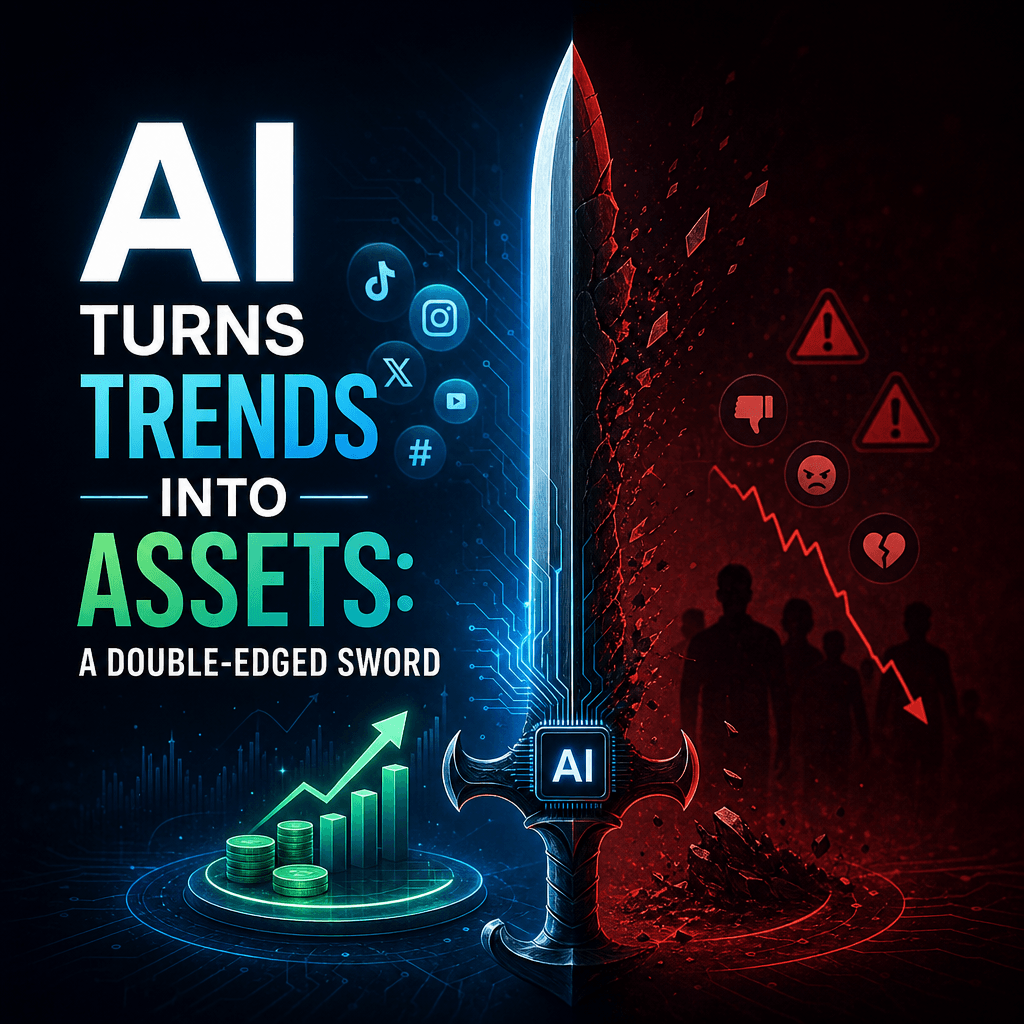
AI Turns Trends Into Assets: A Double-Edged Sword
Uncover AI's ripple effects on content creation and engagement.

Understanding AI's Role in Trend Analysis
Artificial intelligence has become an essential tool in content creation by analyzing trends that dominate the digital space. Such tasks, once reliant on human intuition and experience, are now accelerated by AI's ability to process unfathomable volumes of data. By identifying patterns in social media, search queries, and consumer behavior, AI transforms fleeting trends into enduring brand assets.
The utilization of AI in trend analysis offers businesses the advantage of making data-driven decisions. AI tools can swiftly identify emerging trends that may not be immediately apparent to the human eye. This insight helps brands stay ahead of the curve, capitalizing on trends while they are still fresh and untapped.
However, the reliance on AI for trend analysis also brings potential downsides. There is a risk of over-reliance, where businesses may follow trends too closely without room for creativity or individual brand identity. Balancing AI-driven data with human intuition remains crucial in crafting unique and successful content strategies.
Integrating AI for Content Creation
AI not only identifies trends, it also assists in creating content that resonates with audiences. With AI-driven platforms, brands can produce not only timely content but also customize it to match the tone and style of their unique brand voice. This ability to generate content that is both on-trend and on-brand converts AI insights into tangible brand assets.
The creation of social media content benefits significantly from AI's capabilities. Tools like FlowPost's voice matching and automations translate complex data into engaging posts, maintaining consistency across platforms. This helps brands maintain a cohesive digital presence, essential in the competitive world of social engagement.
Yet, care must be taken to ensure AI-generated content does not strip away the authenticity and originality that audiences value. Content that appears too formulaic may fail to resonate, highlighting the importance of striking the right balance. Creative teams must guide AI efforts with their expertise to reflect true brand ethos.
Impact on Content Scheduling and Publishing
AI’s efficiency extends beyond content creation to its scheduling and dissemination. Crafting a posting schedule that maximizes engagement has always been a delicate art, but AI's precision brings newfound efficacy to this task. By analyzing usage patterns, AI-driven tools determine optimal posting times, offering insights that are both timely and actionable.
For instance, integrating tools such as Buffer's insights on best posting times ensures content reaches audiences at peak engagement periods. These AI-informed decisions can elevate visibility and foster greater interaction with posts. Hence, AI transforms the equal parts of art and science that compose content strategy into a well-oiled process.
While it may streamline operations, depending solely on AI for scheduling can lead to potential pitfalls. AI tools must be carefully managed to align with broader marketing strategies and human oversight is necessary to adapt to changing circumstances. Content scheduling should remain flexible, combining AI insights and human judgment for the most effective reach.
Navigating AI's Trend-Discovery Landscape
AI’s prowess in spotting trends comes from its unparalleled ability to analyze social media at scale. Platforms like FlowPost leverage AI to identify conversations and hashtags that brands should tap into. This approach enables businesses to modify their strategies in response to real-time developments.
The rapid and data-driven capabilities of AI help in predicting which trends will stick around, turning potential hypes into a reservoir of assets. Predictive analytics tools forecast the longevity of trends, distinguishing those worth investing in from the ephemeral. This ensures that marketing efforts are consistently aligned with consumer interests.
Nevertheless, solely following AI-discovered trends can lead to an overcrowded content landscape. When multiple brands chase the same trends, achieving differentiation becomes more challenging. Brands must anticipate AI-generated trends while also finding creative avenues to stand out among competitors.
AI's Contribution to Consumer Engagement
The relationship between AI and consumer engagement is transformative, allowing brands to interact with audiences in more meaningful ways. AI tools personalize engagement by tailoring content to individual preferences, leading to higher retention and conversion rates. Through trend-based automated strategies, AI improves both brand reach and consumer loyalty.
AI’s ability to analyze vast user data enables it to deliver personalized experiences that enhance consumer satisfaction. Tools like FlowPost's collaborative dashboard facilitate dialogue between teams, allowing seamless engagement strategies. This directly contributes to building lasting relationships with audiences, once largely dependent on intuition.
However, there exists a potential challenge, where brands risk losing the human touch in their interactions. Over-optimization can result in impersonal or robotic communication that alienates consumers. Ensuring a balance between automated strategies and human touchpoints is essential to maintain consumer trust and authenticity.
AI's Role in Video Content Strategy
The use of AI in crafting video content strategies has grown, thanks to its capability of analyzing visual trends. Video formats, which are a staple of social media, benefit from AI that can identify viral best practices and preferences. This capacity allows for optimized content that responds to both platform algorithms and consumer demand.
Employing AI in video strategy can help brands conform to guidelines such as Instagram's image size and resolution standards. AI tools ensure compliance, thereby maximizing the reach and effectiveness of video content. Moreover, understanding these parameters allows brands to adapt video aesthetics across various platforms seamlessly.
Despite its advantages, AI’s influence on creative direction can sometimes lead to homogenized content. Over-reliance on data may stunt creativity, producing similar outputs without distinctive flair. It's vital for creative teams to use AI insights to inform rather than dictate the creative process of video content.
AI Challenges in Maintaining Content Authenticity
As AI grows more central to content creation, preserving authenticity becomes a pertinent challenge. AI's propensity to generate content from existing trends may result in a lack of originality if not carefully managed. Brands must sustainably blend AI-derived trends with unique perspectives to maintain distinctiveness.
Balancing AI insights with original content creation requires intentional effort. While AI can suggest popular themes, the true value lies in how a brand leverages these themes to tell its unique story. Brands must remain vigilant against the homogenizing tendencies of AI, ensuring their content continues to reflect their true spirit.
The challenge extends to capturing brand voice in AI-generated content. It's crucial for tools like FlowPost's voice matching to complement rather than override existing brand narratives. Maintaining an authentic voice amidst AI advancements keeps content genuine and resonant with audiences.
Exploring AI's Intrinsic Value Offerings
AI's potential to convert trends into assets provides intrinsic value beyond mere engagement metrics. As tools become more sophisticated, businesses can derive deeper insights into consumer behavior and market opportunities. AI doesn’t just change how brands interact with trends, it enhances strategic decision-making rooted in data.
Innovations such as FlowPost's CAC secrets guide reveal insights into cost efficiency and strategic investment, enabling tighter alignment with business goals. This empowers brands to allocate resources effectively and improve return on investment. AI’s ability to add value through analytics and reporting solidifies its role as an invaluable asset in any marketing toolkit.
Conversely, AI’s complex value offerings require learning and adaptation from users. Misinterpretation of AI-driven insights can lead to misguided strategies, highlighting the need for proper understanding and application. Companies benefit from investing in AI education and training to maximize potential returns.
AI's Role in Team Collaboration
By facilitating effective team collaboration, AI enriches content creation environments. Platforms like FlowPost's collaborative dashboard streamline communications, ensuring all team members are aligned with organizational objectives and campaigns. This integration of AI into teamwork reduces redundancy and enhances productivity.
AI provides collaborative opportunities by enabling teams to jointly analyze data and derive collective insights. These platforms allow for real-time adjustments and feedback loops that are essential in fast-paced digital campaigns. Efficient collaboration fosters an environment where AI assists in aligning brand efforts with current trends and consumer expectations.
However, effective collaboration requires more than just technological tools, it necessitates a cohesive team strategy. Brands must cultivate a culture of trust and transparency alongside AI enhancements to foster genuine collaboration. Without strategic oversight, AI’s potential to improve teamwork remains underutilized.
The Double-Edged Sword of AI in Social Media
The transformative role of AI in converting trends into assets is not without complexity. AI’s capacity to affect both positive engagement and potential pitfalls reflects its double-edged nature. The advantages of efficiency, precision, and market insight are tempered by challenges like authenticity, originality, and dependency.
AI's impact encompasses both opportunities and responsibilities for marketers. Tools like FlowPost offer cutting-edge functionalities to help brands navigate this intricate landscape. By strategically leveraging AI tools while maintaining a strong brand identity, organizations can turn AI's double-edged sword into a powerful asset.
Brands striving for sustainable success must navigate the nuanced terrain presented by AI. Harnessing AI's strengths while actively managing its limitations ensures brands maintain a competitive edge. This balance will define the future of content creation, turning fleeting trends into timeless assets.