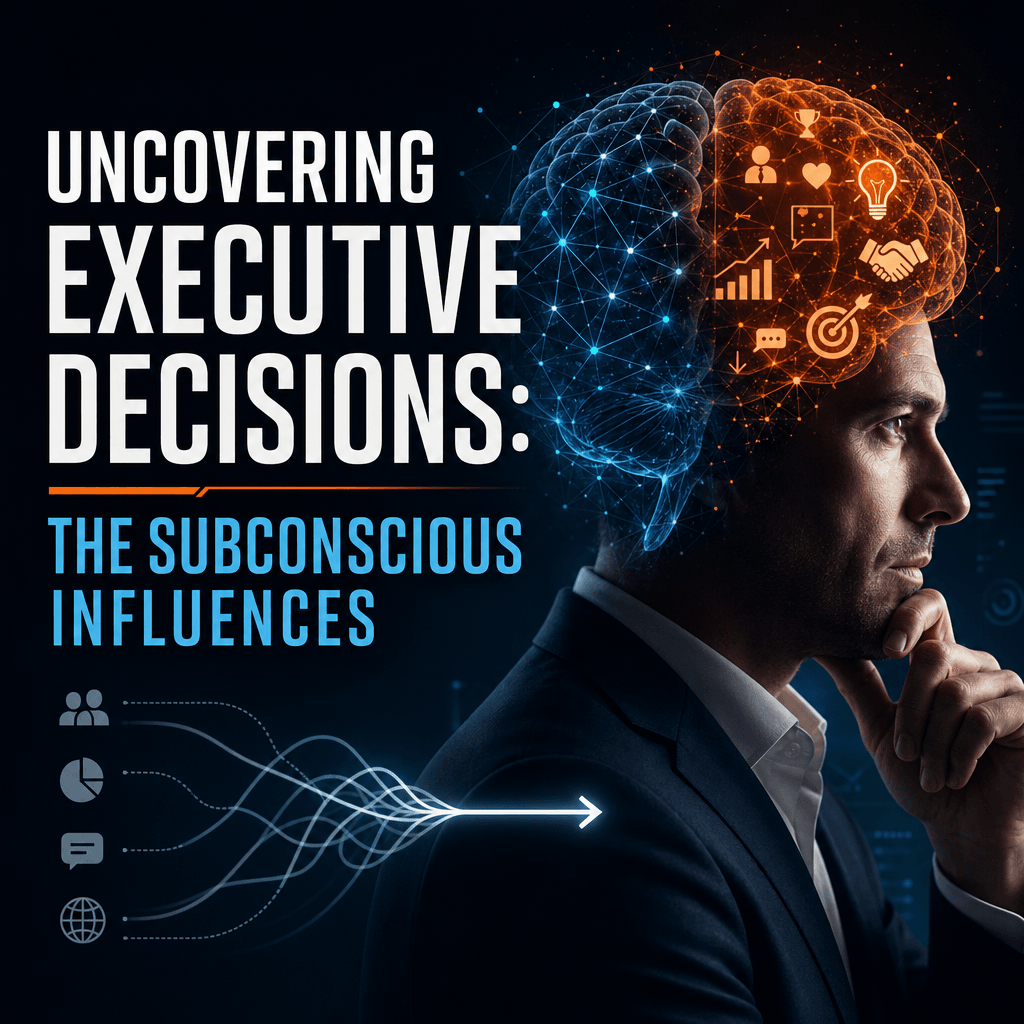
Uncovering Executive Decisions: The Subconscious Influences
Explore hidden factors shaping decisions in business leadership.

The Role of Emotions in Executive Decision-Making
Emotions deeply influence decision-making, often without us realizing. Executives may believe their choices are purely logical; however, subconscious emotions can guide their judgments. Recognizing and managing these emotions can significantly improve strategic outcomes in business leadership.
Understanding emotional influences can reframe business challenges. For instance, fear of failure might impede risk-taking necessary for innovation. Practices such as mindfulness or executive coaching can help leaders become aware of and control these emotional undercurrents.
Certain emotions can even bolster decision-making when harnessed correctly. Positive emotions, like excitement and optimism, can drive creative solutions. On the other hand, an awareness of negative emotions can prevent rash decisions, allowing a more tempered approach to leadership.
Cultural Bias and Its Subconscious Impact
Cultural bias often shapes an executive's perception of business dynamics. These biases can affect everything from hiring practices to global market strategies. Understanding these biases can enhance cross-cultural communication and decision-making.
Executives must strive to acknowledge and mitigate the effects of cultural biases. Diverse teams can help counteract these biases, providing a broader perspective on challenges and opportunities. Tools like FlowPost enable leaders to maintain consistent, culturally-aware messaging across platforms, fostering inclusivity.
Recognizing one's own cultural biases is the first step towards reducing their influence. Regular training and open conversations about culture can promote a more comprehensive understanding. By doing so, leaders can make more informed and unbiased decisions that serve their organizations well.
The Influence of Cognitive Biases
Cognitive biases, like confirmation bias or anchoring, significantly sway decisions. These biases can cause executives to seek out information that confirms their pre-existing beliefs or to rely too heavily on the first information received. Acknowledging these biases empowers leaders to make more balanced decisions.
To counter cognitive biases, leaders should actively seek dissenting opinions. Encouraging a culture where questioning and debate are welcomed can reduce the impact of these biases. With the use of FlowPost’s trend discovery features, executives can stay informed of diverse perspectives, which aids in diminishing the effects of confirmation bias.
Structured decision-making frameworks can help mitigate cognitive biases. Such frameworks guide leaders through a systematic process, ensuring all aspects are considered without undue influence from mental shortcuts. Practicing these frameworks regularly can enhance the quality of executive choices over time.
The Power of Intuition in Leadership
Intuition plays a crucial role in leadership, often guiding snap judgments. It's developed from accumulated experiences and pattern recognition over time. However, relying solely on intuition can be risky if not paired with analytical thinking.
Executives should evaluate when and how intuition informs their decisions. By comparing intuitive insights with data-driven analysis, leaders can validate their gut feelings and ensure balanced decisions. For example, using data from FlowPost to automate social media strategies complements intuitive insights with rigorous analysis.
Enhancing intuitive capabilities involves continuous learning and exposure to diverse scenarios. By broadening their experiences, leaders refine their rapid decision-making skills. This combination of intuition and analysis often leads to more effective and innovative outcomes.
The Subtle Impact of Stress on Decisions
Stress dramatically influences executive decision-making, often without being overtly acknowledged. Under stress, leaders may default to risk-averse choices or hastily made decisions. Identifying stress triggers can reduce their impact on leadership effectiveness.
Managing stress requires both personal and organizational strategies. Encouraging a balanced work-life culture and promoting wellness initiatives can help executives mitigate stress. Additionally, leveraging tools to streamline operations, such as FlowPost, can ease day-to-day pressures.
Awareness of stress responses allows leaders to adapt their strategies. By understanding how stress affects their reasoning, executives can implement countermeasures. These efforts not only improve individual well-being but also enhance the overall decision-making process within the organization.
Socialization and its Subconscious Role
Social dynamics and networks subtly influence executives' choices. The opinions and behaviors of peers can sway decisions, often without conscious acknowledgment. Awareness of these social influences is critical for authentic decision-making.
Executives can overcome the subconscious impact of socialization by expanding their professional networks. Engaging in diverse professional circles allows leaders to encounter novel ideas and viewpoints. Collaborating through platforms like LinkedIn can facilitate these connections, providing fresh insights.
Reflecting on the influence of social networks can aid leaders in maintaining their distinct leadership identities. By considering diverse perspectives, they remain open to new ideas while sustaining their strategic vision. This intentional balance enhances authenticity in executive decisions.
The Effects of Personal Values on Leadership
Personal values act as subconscious drivers in executive decision-making. These values shape leaders’ visions, missions, and the strategies they employ. Understanding and aligning decisions with personal values can foster more cohesive and committed leadership.
Executives should explicitly identify and evaluate their core values. This involves introspection and discussions with mentors or coaches to ensure clarity and alignment. When leaders embrace platforms like FlowPost to maintain consistent messaging, they reinforce their values across all communications.
Beyond self-awareness, leaders should actively integrate their values into organizational culture. Doing so ensures that decisions made resonate throughout the company. Such a values-aligned approach enhances trust and cohesion both internally and externally.
The Influence of Historical Successes and Failures
Past successes and failures greatly influence future decisions, often subconsciously. Leaders might gravitate toward strategies that previously yielded positive results, inadvertently stifling innovation. Conversely, the fear of repeating past failures can deter leaders from taking necessary risks.
Reflecting on past experiences offers valuable insights into decision patterns. Executives should chronicle both triumphs and setbacks, assessing them with objectivity. Platforms like Hootsuite help leaders analyze campaign outcomes, fostering continuous learning and adjustment.
Learning from history involves a balanced recognition of its lessons without being confined by them. Leaders must cultivate an adaptive mindset, open to fresh opportunities. This adaptability, informed by history but not restricted by it, enriches executive decision-making.
Bias from Media Consumption
Media narratives can subtly influence business leadership perspectives. Frequent media exposure shapes subconscious biases, affecting perception and potentially skewing strategic decisions. Recognizing and countering media biases is vital for authentic leadership.
Leaders should cultivate diverse media consumption to mitigate these biases. Engaging with multiple sources and viewpoints allows for a well-rounded understanding of issues, reducing the risk of skewed perspectives. Using tools like FlowPost can help filter relevant media, ensuring balanced and unbiased insights.
Implementing media literacy within the organization promotes critical thinking. Training in analyzing media helps executives differentiate between fact and opinion. This balanced approach ensures decisions are informed by accurate, diverse information, fostering effective leadership.
Conclusion: Navigating Subconscious Influences in Leadership
Subconscious influences are an inevitable part of executive decision-making. By identifying and understanding these underlying factors, leaders can make more informed, authentic choices. This awareness is a powerful tool for effective and innovative leadership.
Executives must regularly reflect on their emotions, biases, and values. Utilizing analytical tools alongside intuitive insights can provide balanced strategies. Platforms like FlowPost offer automated, nuanced solutions aligning with personal and organizational goals, enhancing decision consistency.
By proactively addressing these subconscious elements, leaders are better equipped to guide their organizations towards success. Cultivating this self-awareness ensures authentic and strategic decision-making. Ultimately, it is this blend of introspection and innovation that defines exemplary leadership.