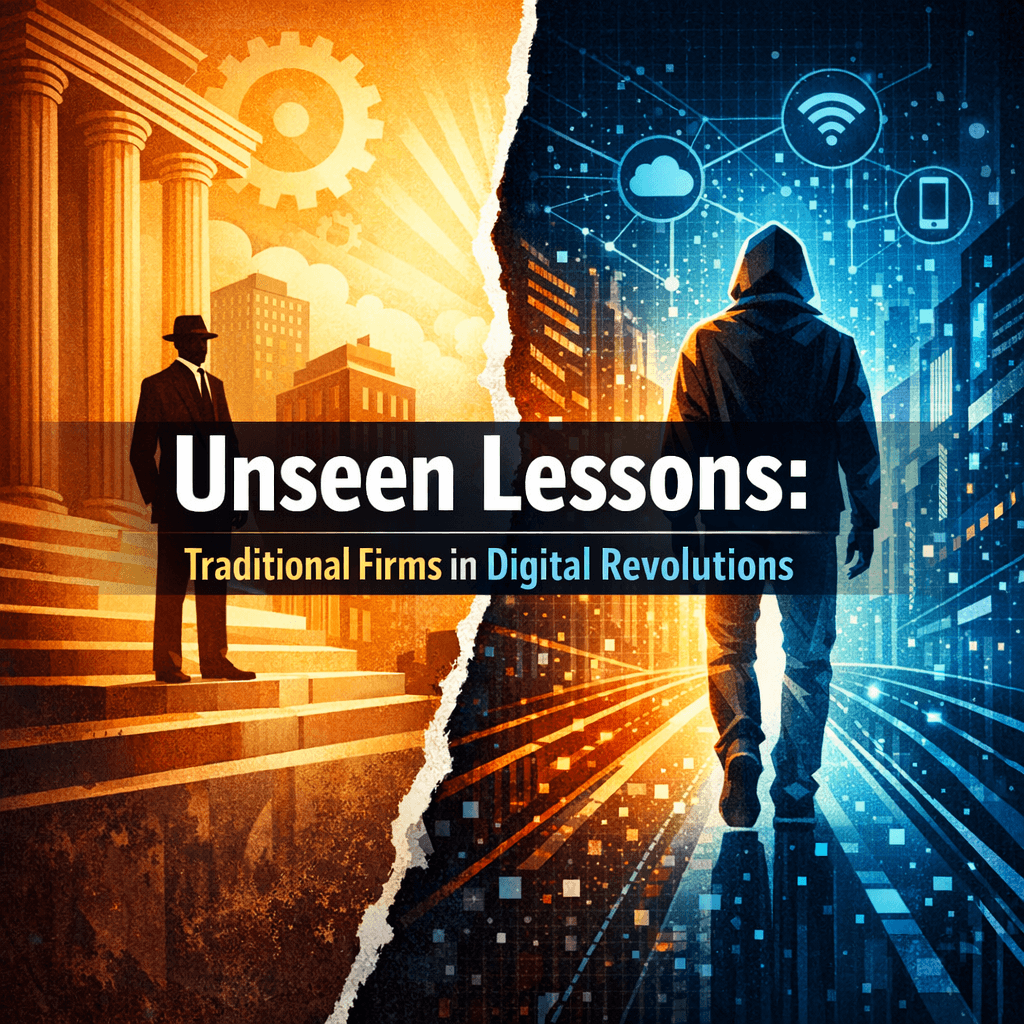
Unseen Lessons: Traditional Firms in Digital Revolutions
Explore how past transitions can shape future successes.

Understanding Historical Business Adaptations
History has taught us that the ability to adapt is crucial for survival. During the industrial revolution, countless traditional businesses learned to integrate new machinery to avoid obsolescence. Similarly, today’s digital revolution demands that firms pivot their strategies to remain competitive and prosper.
Examining how traditional firms navigated this shift reveals valuable insights. Successful companies embraced technological advancements, ensuring they weren't clinging to outdated methods. By doing so, they not only survived but also set new standards in their respective industries.
For modern businesses, these historical adaptations emphasize the importance of flexibility. Firms need to be on the constant lookout for emerging digital trends. This readiness to adapt often dictates success in the fast-evolving landscape of digital innovations.
The Power of Strategic Partnerships
Throughout business history, strategic partnerships have often been a lifeline for survival and growth. Firms that managed to forge mutually beneficial alliances unlocked avenues to new markets and technologies. This approach is mirrored today as companies collaborate to leverage collective strengths while navigating the complexities of digital transformation.
The emergence of social media platforms like LinkedIn Marketing Solutions highlights modern partnerships that facilitate outreach and digital presence. Companies collaborating with digital marketing platforms can harness new avenues, improving efficiency and reach.
In these digital revolutions, forming partnerships can be a vital strategy to help businesses stay relevant. It's about spotting potential synergies with technological entities and leveraging those alliances to expand one's digital footprint effectively.
Adapting Workforce Dynamics
One oft-overlooked lesson from the past is adapting workforce dynamics in response to new technologies. As seen during the industrial era, businesses had to retrain employees to work efficiently with machines. Today, digital transformations necessitate a similar shift, encouraging upskilling in digital literacy.
Training employees to master new tools or platforms like Hootsuite’s digital tools can prove advantageous. This not only ensures employee retention but also empowers them to drive the company’s growth in a tech-driven economy.
Furthermore, organizations must cultivate a culture that supports continuous learning. As technology constantly evolves, encouraging a growth mindset among employees can lead to impressive innovations, keeping a firm ahead of competitors.
Harnessing Data for Decision-Making
In the digital age, data has become the new gold. Traditional firms that successfully navigated past revolutions quickly recognized the value in insights derived from customer data. Today’s digital platforms provide businesses with an unprecedented level of access to consumer behavior and trends.
Accurate data analysis enables companies to make informed decisions akin to those discussed on FlowPost’s blog about evolving strategies. By identifying trends early, firms can adjust marketing strategies, optimizing campaigns to align with dynamic consumer preferences.
Data-driven decision-making helps in carving pathways to innovation, while minimizing the risks associated with speculation. Prioritizing this approach can translate into a significant competitive edge, guaranteeing a firm’s successful transition into digital environments.
Valuing Customer-Centric Approaches
Customer-centric approaches have always been at the heart of successful business transformations. Traditional firms that focused on understanding their customers' needs adapted more seamlessly to changing landscapes. This principle remains relevant as firms traverse digital environments.
Ignoring customer needs can segregate a business from its audience. Digital solutions like LinkedIn Ads provide a way to tailor messages and target specific demographics, emphasizing the power of a customer-first philosophy.
Continuous feedback loops and engagement help nurture relationships and foster loyalty. Establishing a loyal customer base is vital to withstand fluctuations that accompany technological progress, ensuring stability and growth through changing times.
Experimenting with Agile Marketing Strategies
Traditional firms transitioning successfully during revolutions often displayed a willingness to experiment with flexible strategies. Embracing agile marketing can allow businesses to pivot and swiftly capitalize on burgeoning trends, maximizing impact across digital channels.
Exploring innovative tactics, like those mentioned in FlowPost’s bootstrapped marketing hacks, becomes key to standing firm amid digital disruption. Agile marketing approaches promote creativity and adaptability, lowering risks and costs.
Digital experimentation paves the way for organic growth in new markets. By maintaining flexibility and adopting creative strategies, traditional firms can translate unseen lessons into future successes, aligning with a constantly shifting marketplace.
Maximizing Reach through Automation
The significance of process automation is a lesson from the industrial age that remains relevant. Today, automation is transforming how traditional firms operate, streamlining operations and maximizing reach without additional resources.
Tools like FlowPost’s content automation for LinkedIn exemplify new capabilities in efficiently managing social media, reducing manual effort and human error. Automation aids in increasing output, conserving valuable time for strategic planning.
By harnessing automation, firms can maintain the pace needed to engage their audience effectively. It enables enterprises to deliver consistent content across all major platforms, ensuring prominence in a crowded digital arena.
Leveraging Data Analytics to Outpace Competitors
Modern firms can outpace their competitors by leveraging comprehensive data analytics to inform decisions. Data is no longer supplementary; it is integral to understanding the competitive landscape and identifying prospective advantages.
With tools such as FlowPost's Instagram post timing insights, businesses forecast trends and engage with audiences at optimal times. This strategic use of analytics allows firms to refine operations while acquiring insights to enhance their competitive stance.
Incorporating detailed analytics helps firms remain agile and stay ahead of the digital curve, gaining a holistic understanding of the actions required for sustained growth. Effectively applying analytics translates to predicting future trends, adjusting strategies, and thriving amid rapid changes.
Scaling Sustainably with Technology
Sustainable growth in the digital age leans heavily on utilizing technology wisely. Traditional firms must identify scalable solutions that not only boost efficiency but also align with long-term visions. Merging technology integration with sustainability ensures robust, future-proof models.
Making informed investments, such as reviewing FlowPost’s pricing options, helps determine the most suitable technologies to adopt. This approach emphasizes balancing immediate needs with sustainable practices to safeguard a firm's progression.
Additionally, leveraging technology for environmental responsibility resonates with modern consumers. Sustainable practices not only improve brand perception but also secure a firm's enduring development in an increasingly eco-conscious marketplace.
Synthesis of Unseen Lessons
Reflecting on history empowers firms with strategies to navigate future digital revolutions effectively. Past adaptations highlight the need for strategic alliances, agile strategies, and a focus on customer-centric approaches. Elevating digital presence through partnerships and automation remains crucial.
Utilizing data analytics is key to uncovering actionable insights that facilitate informed decision-making. Mastery of these strategies enables firms to harness the full potential of the digital age, turning challenges into stepping stones for success.
Registering for platforms like FlowPost can aid in adopting these transformative strategies. As digital revolutions redefine industries, integrating these lessons ensures traditional firms are poised not only to adapt but to thrive in their next chapter.